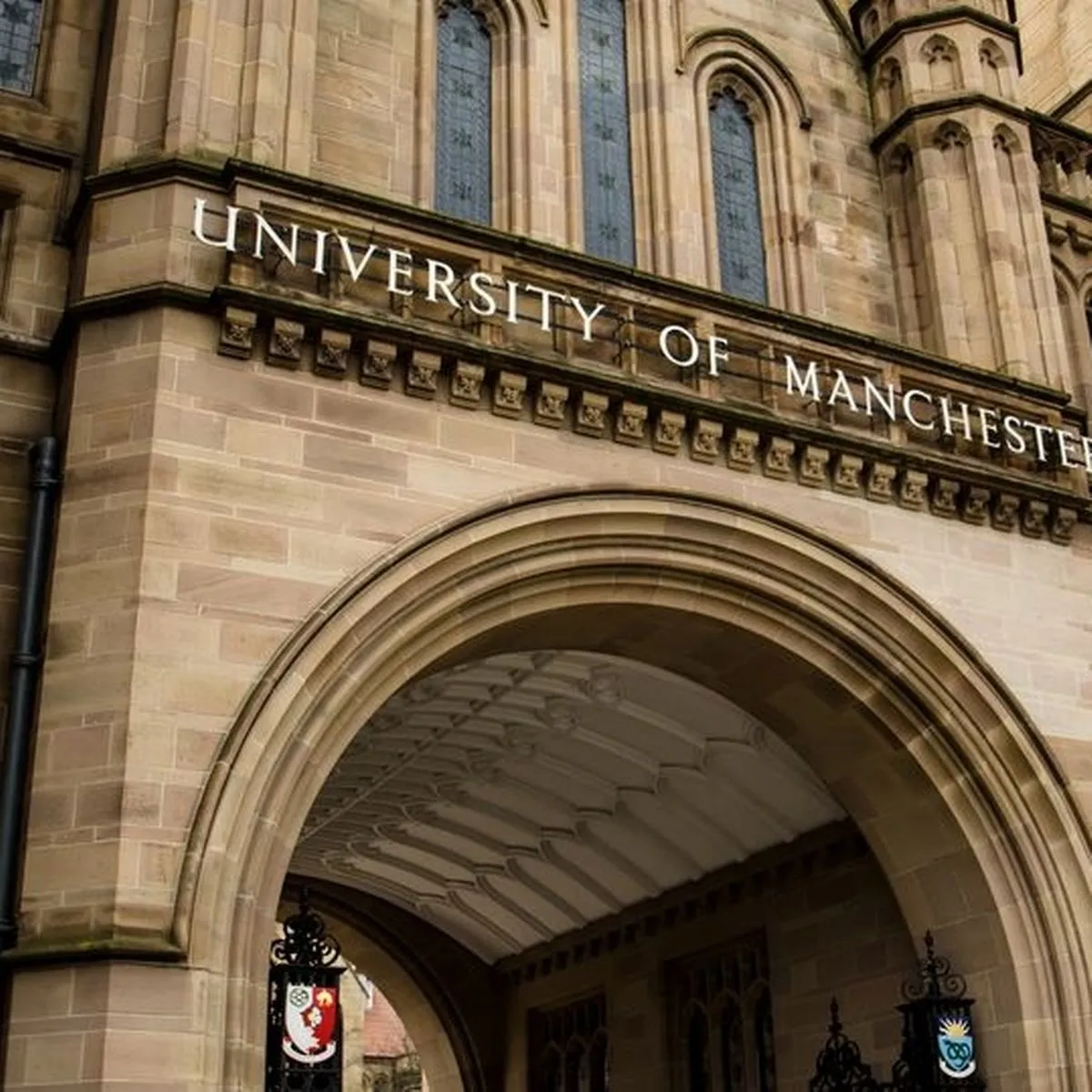
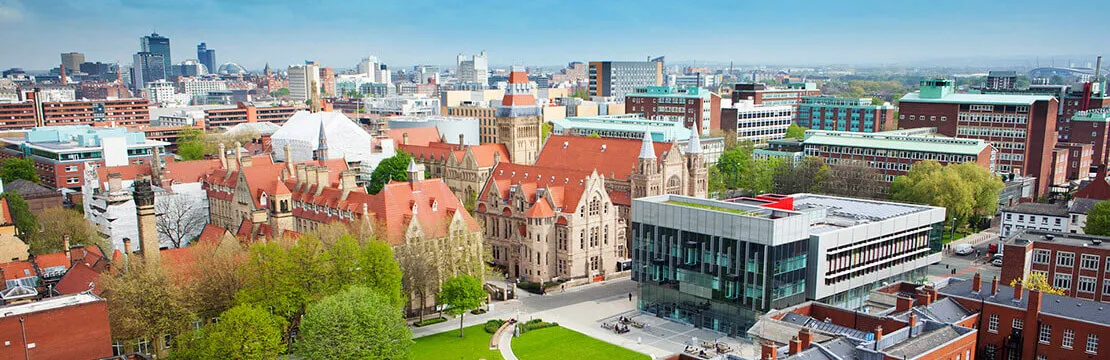
University of Manchester
The University of Manchester Oxford Rd Manchester M13 9PL UK
About

University Type
Public

Manchester,
United Kingdom

Year Established:
1824
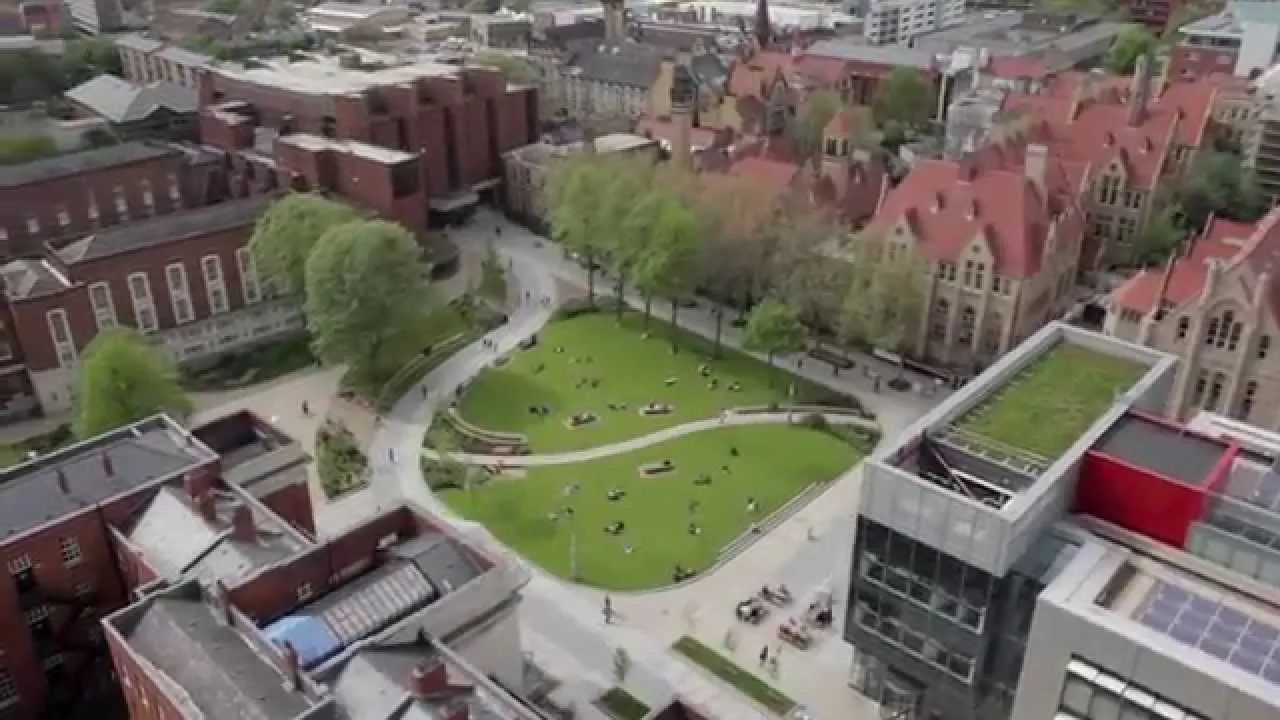
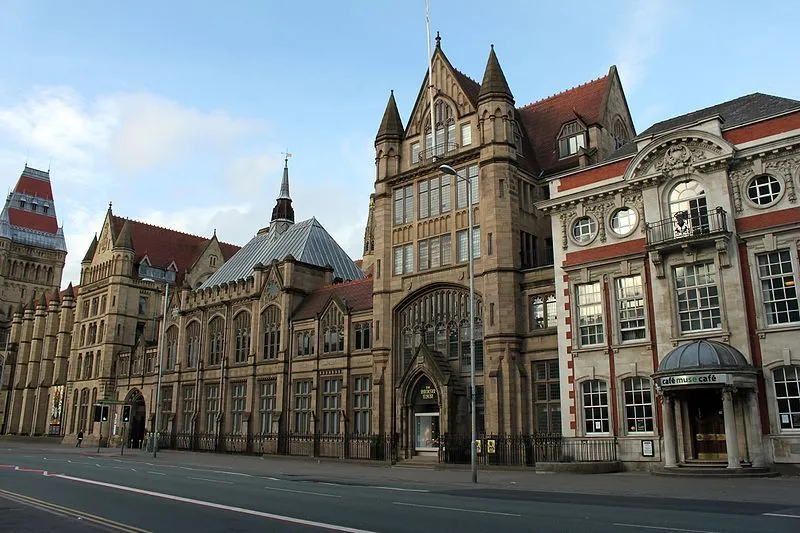
The University of Manchester is a public research university in Manchester, England. The main campus is south of Manchester City Centre on Oxford Road. The university owns and operates major cultural assets such as the Manchester Museum, Whitworth Art Gallery, John Rylands Library and Jodrell Bank Observatory—a UNESCO World Heritage Site.
The University of Manchester is considered a red brick university, a product of the civic university movement of the late 19th century. The current University of Manchester was formed in 2004 following the merger of the University of Manchester Institute of Science and Technology (UMIST) and the Victoria University of Manchester. This followed a century of the two institutions working closely with one another.
The University of Manchester Institute of Science and Technology was founded in 1824, as the Mechanics' Institute. The founders believed that all professions somewhat relied on scientific principles. As such, the institute taught working individuals branches of science applicable to their existing occupations. The Victoria University of Manchester was founded in 1851, as Owens College. Academic research undertaken by the university would be published via the Manchester University Press from 1904.
The University of Manchester is a member of the Russell Group, the N8 Group, and the worldwide Universities Research Association. The University of Manchester has 25 Nobel laureates among its past and present students and staff, the fourth-highest number of any single university in the United Kingdom. In 2019/20, the university had a consolidated income of £1.1 billion, of which £264.7 million was from research grants and contracts (6th place nationally behind Oxford, UCL, Cambridge, Imperial and Edinburgh). It has the fifth-largest endowment of any university in the UK, after the universities of Cambridge, Oxford, Edinburgh and King's College London.
Rankings

#35
QS

#68
USNews

#56
THE
University of Manchester Program Rankings
University of Manchester Highlights
FAQs
What are the most popular graduate programs offered at University of Manchester?
The University of Manchester is renowned for its programs in Business Administration, Engineering, Medical Sciences, and Law. It also excels in Humanities and Social Sciences, offering a comprehensive educational experience. These programs are popular due to their innovative teaching methods and strong industry connections, preparing students effectively for their future careers.
What is the Annual Cost of attendance at University of Manchester?
The annual tuition fees for international students typically range between £19,000 to £44,000, depending on the program. Living costs, including accommodation, food, travel, and other expenses, are approximately £12,000 per year. The total average cost of £31,000 annually converts to about ₹31,00,000 INR, based on the current exchange rate of 1 GBP = 100 INR.
What Financial aid and scholarship options are available at University of Manchester?
The University of Manchester offers a variety of scholarships and financial aid options for international students, including merit-based scholarships, country-specific awards, and subject-specific funding. Prospective students can apply for scholarships directly through the university’s website where detailed instructions and criteria are listed. It’s advisable to apply early, as some scholarships have limited availability and early deadlines.
What is the reputation and ranking of University of Manchester?
The University of Manchester consistently ranks among the top universities globally. It is particularly renowned for its research output and teaching quality in areas like Engineering, where it ranks in the top 50 worldwide, and Business, consistently rated among the top 100 globally. Its Life Sciences programs are also highly regarded, often ranking in the top 100 in various international rankings.
What is the campus culture like at University of Manchester?
The campus culture at the University of Manchester is vibrant and diverse, reflecting its large international student community. The university hosts numerous cultural festivals, sports events, and academic competitions throughout the year. There are over 400 societies and clubs, ranging from academic and professional to recreational and cultural, ensuring that every student finds their niche and community.
What are the housing options at University of Manchester?
The University of Manchester provides various on-campus housing options, including halls of residence and student apartments that cater to different preferences and budgets. For those preferring off-campus living, popular areas include Fallowfield, Withington, and Victoria Park, which are known for their affordable rental prices and vibrant student communities. These areas offer good transport links to the university and local amenities.
Similar Universities
.webp)
.webp)