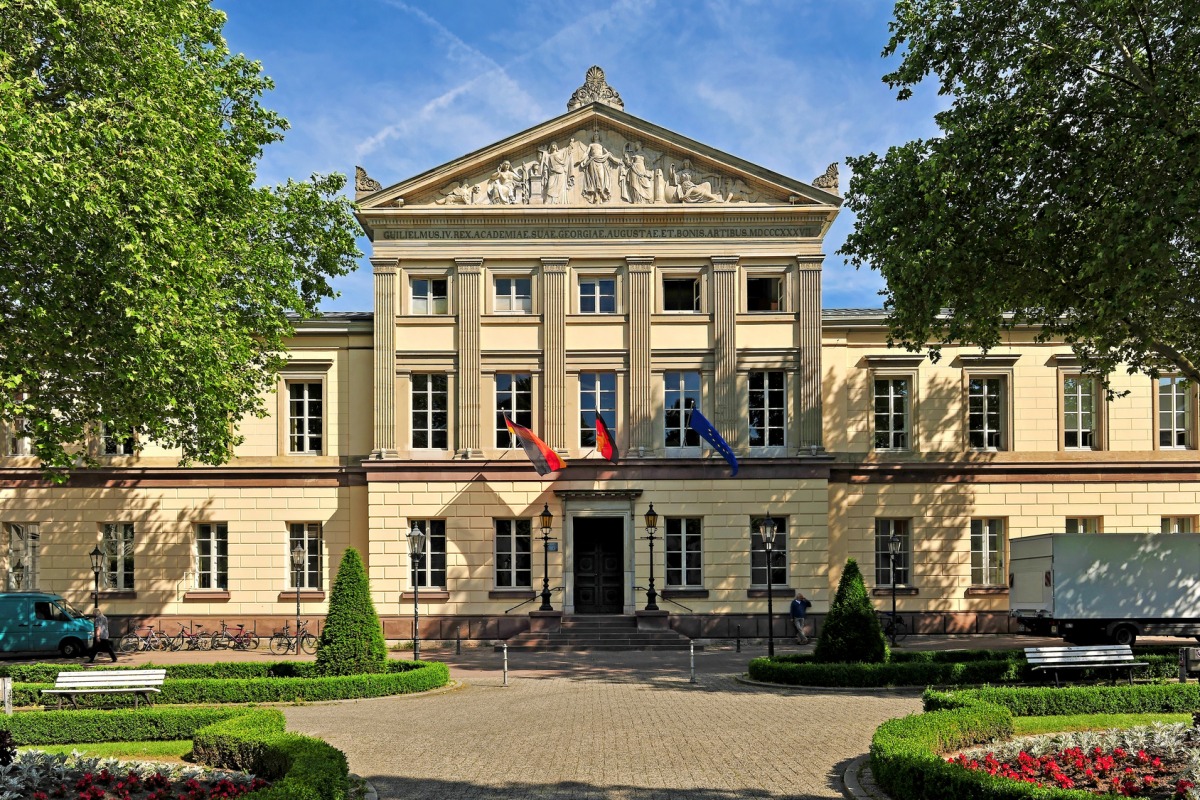
University of Göttingen
Georg-August-University Göttingen, Wilhelmsplatz 1 (Aula), 37073 Göttingen,
About

University Type
Public

Saxony,
Germany

Year Established:
1737
In 1734, King George II of Great Britain and Elector of Hanover, commanded his Prime Minister in Hanover, Gerlach Adolph von Münchhausen, to establish a university in Göttingen to spread the ideals of the Enlightenment. Napoleon famously remarked, "Göttingen belongs neither to a State, nor to Germany, and is the University of Europe".
The initial university infrastructure was modest, comprising only a riding hall and a fencing house, with lectures held in the Paulinerkirche, Dominican monastery, or professors' homes. A university auditorium wasn't constructed until the 19th century.
Throughout the 18th century, the University of Göttingen was renowned among German universities for its commitment to the free spirit and scientific exploration. Georg Christoph Lichtenberg, a prominent scholar, held one of the first professorships dedicated to experimental physics in Germany from 1769 to 1799. By 1812, Göttingen had established itself as a modern, internationally recognized university, boasting a library with over 200,000 volumes.This period marked Göttingen's ascendancy in academic circles, emphasizing its role in fostering an environment conducive to scientific inquiry and innovation.
Rankings

#243
QS

#182
USNews

#122
THE
University of Göttingen Highlights
FAQs
No FAQs available.
Similar Universities